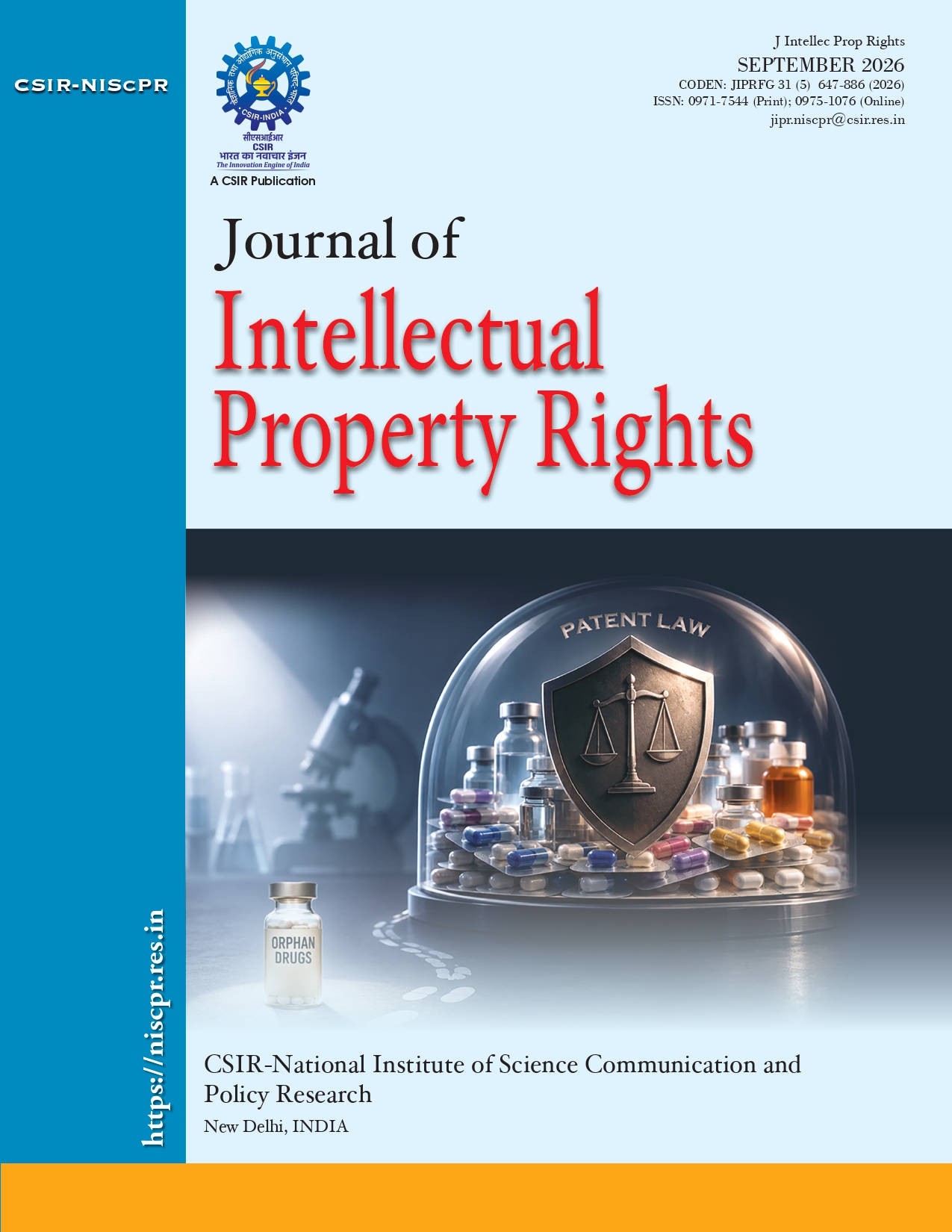
Orphan Drug Development in India: Analysing Patent Law Limitations, Challenges and the Need for Reform in India
DOI:
https://doi.org/10.56042/jipr.v31i5.19328Keywords:
Orphan Drugs, Orphan Diseases, Patent, Pharmaceuticals, market exclusivity, Drug DevelopmentAbstract
The growth of the pharmaceutical industry shows how important the patent system is, because without it, the industry would not have become as large as it is today. However, the potential of patents to foster innovation is constrained in certain areas where commercial viability is limited. Orphan drug is a pharmaceutical product used for diseases that affect a small number of people (rare diseases). What constitutes a rare disease does not have a uniform definition. Although patents offer exclusivity, they fail to sufficiently incentivize orphan drug development due to the small market size and limited potential to recover investments in addition other challenges like such as statistical hurdles in development and lack of awareness.
This paper examines the limitations of the patent system in encouraging R&D in orphan drugs. It examines the orphan drug landscape, which faces significant unmet demand, and critically analyses India’s approach to orphan drug development initiatives to point out gaps. By analyzing global best practices, it advocates for a balanced framework benefiting both developers and society. Such an approach would be explored by analyzing global best practices and how they may be adopted in the Indian context.